
A beautiful smile is not only a sign of health, but also an important element of self-confidence. In our dental clinic in Lviv , we offer modern methods of tooth restoration, and one of the most effective is veneers. These thin veneers will help you get a perfect smile quickly and painlessly. Many people talk about this method of tooth restoration, most likely, someone you know has also used this service, so the article from the “Bioclinic” dentistry center was created so that you can get the most complete information, including how much veneers for all teeth cost (prices are indicated at the end of the article), and be able to make the right decision.
Why do you need veneers?
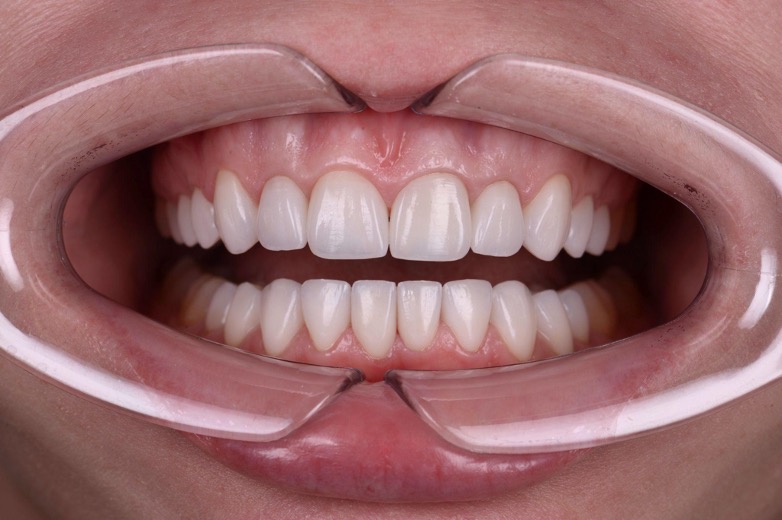
Dental veneers are ultra-thin, no larger than 0.5 mm, non-removable ceramic or composite overlays on teeth, which are used to restore teeth in the “smile zone”. They cover four surfaces of the tooth: vestibular, proximal and cutting edge. Thanks to veneers, you can change the color, shape of the teeth or replace minor defects, such as chips or cracks in the tooth enamel.

What are the indications for installing veneers?
It is worth noting that the installation of veneers is recommended in various situations when it is necessary to improve the aesthetics of the teeth. Specialists at our dental center usually recommend veneers to patients when there is one of the following problems:
- Diastemas/tremes. If there are gaps between the teeth, dental veneers will help to eliminate them, creating a harmonious dentition.
- Chips/cracks of tooth enamel. Veneer hides enamel defects, giving teeth a healthy appearance.
- Discoloration of the tooth. If the teeth have an uneven color or stains that cannot be removed by whitening, veneers are the perfect solution.
- Crowding/displacement of teeth. Veneers can visually align the tooth row without long-term orthodontic treatment.
- Disturbance of tooth shape. If the shape of the teeth does not suit you, it can be adjusted in this way.
- Uneven tooth surface. Veneers will make the surface of the teeth smooth and shiny.
In dental practice, there are often cases when the installation of veneers is impractical, so a specialist can offer a worthy alternative:
- Crowns. They completely cover the tooth and restore its function and aesthetics.
- Composite restoration. Restoring the appearance of teeth with a filling material.
- Orthodontic treatment. Correcting the position of the teeth using braces or aligners.
This or that type of treatment is determined only by the doctor after a detailed examination, the purpose of which is to satisfy all the patient’s needs.
What types of veneers can be installed?
There are different types of veneers, which differ in the manufacturing method, materials and installation method. Let’s consider the main methods of manufacturing veneers:
- Direct veneers. They are made directly in the patient’s oral cavity in one visit. The doctor prepares the tooth, isolates it with a rubber dam system and applies the composite material in layers. This is a fast and relatively inexpensive method.
- Indirect veneers. They are made in the laboratory based on scans of the patient’s teeth. These include veneers on a refractory model (the technician applies ceramics to the tooth model from a refractory mass and fires it in an oven), pressed veneers (made by pressing ceramics under high pressure and temperature) and milled veneers (created on a milling machine using computer modeling and 3D scanning).
Decide on the type of veneers that are best installed at a preliminary consultation with a doctor who will assess the condition of the teeth and gums.
Why are overlay (temporary) veneers needed?
Not all patients of the “Bioclinic” dentistry center are ready to install permanent veneers. That is why there is an alternative solution – overlay veneers. These are thin linings that are easily put on the teeth without requiring preparation or grinding. They allow you to quickly improve the appearance of your smile, hiding chips, cracks in tooth enamel, tooth discoloration and other defects.
Reviews about overlay veneers indicate that they are ideal for temporary use, for example, before important events or photo shoots. They are made of high-quality materials that provide a natural look and comfort when worn. Although veneers are not a permanent solution, they allow you to estimate how your teeth will look after permanent ceramic or composite veneers are installed.
It is worth noting that veneers do not replace professional dental treatment and do not solve dental health problems. They serve as an aesthetic addition and can be part of a comprehensive smile improvement plan, which can already be concluded from the photo of the veneers. The popularity of the service explains the positive reviews about removable veneers, which are often used even by celebrities.

What are the advantages and disadvantages of this type of tooth restoration?
Like any other method of tooth restoration, veneers have pros and cons that should be taken into account. Among the main advantages of veneers, the following are worth noting:
- Aesthetics. They provide a natural look to the teeth thanks to the features of materials that transmit light in a similar way to natural enamel.
- Biocompatibility. Materials from which veneers are made are hypoallergenic and do not cause irritation.
- Abrasion resistance. Stain-resistant and retain color for many years.
- Minimal preparation. To install veneers, you need to remove the minimum layer of enamel that preserves healthy tooth tissue.
Of course, specialists honestly talk about the disadvantages of veneers, among which you can highlight:
- The price of one veneer. Quality materials and technologies increase the total cost of the procedure, especially when it comes to the price of veneers for all teeth.
- Duration of production. Indirect veneers require several visits to the dentist and time for fabrication in the laboratory.
- Fragility of the material. Some types of veneers can be fragile and require careful handling.
A balanced decision regarding the installation should take into account all the pros and cons, although the former are frankly more.
Various types of veneers by manufacturing material
In modern dentistry, you can buy veneers, which can be classified, in particular, by the material from which they are made. The following types of veneers can be installed in the “Bioclinic” dentistry center:
- Ceramic. Made of high-quality ceramics that are baked in the oven, the price of ceramic veneers is distinguished by affordability.
- From feldspar ceramics. The technician applies the material in layers, achieving maximum naturalness of color and texture.
- From E-max glass ceramics. They are made of lithium disilicate, have high transparency and strength. An excellent choice for the frontal area.
- From zirconium dioxide. The strongest version is made of zirconium dioxide. Zirconium veneers are suitable for patients with an increased load on the teeth. The price of zirconium veneers may be higher due to their high strength indicators.
- Composite. Similar veneers for teeth can be divided into the following types: direct (made from composite material directly in the patient’s mouth), indirect (made in the laboratory, which provides a more accurate shape and color), ceramic composite (combines a ceramic frame and a composite layer, durable and easily repairable).
- Luminaires. Ultra-thin overlays that are installed without tooth preparation. Ideal for color correction and minor defects.
Depending on how veneers are made, they have their own features and scope of application, so before choosing, the doctor evaluates all important factors and makes a decision that will best meet the patient’s needs. It is also worth noting that different types of veneers have different service life:
- ceramic and zirconium dioxide serve from 10 to 20 years;
- composite veneer has a service life of about 5-7 years;
- luminaries can serve up to 20 years.
Proper care and compliance with the doctor’s recommendations will extend the life of veneers
How does the veneer installation process work?
The process of installing veneers is quite complex and must be carefully thought out to guarantee a high-quality result and durability, which is what determines the price of veneers in Ukraine. This process includes several stages, each of which has its own characteristics and requires professionalism from our specialists.
- Primary consultation. During the initial consultation, the doctor examines the oral cavity, assesses the condition of the teeth before the veneers, the health of the gums, and also determines the indications for the installation of veneers. The patient has the opportunity to discuss his concerns with the doctor wishes regarding the shape, color and general appearance of future veneers. This is an important stage, as it allows you to create an individual treatment plan that meets the needs and expectations of the patient.
- Preparation of teeth. The doctor performs minimal enamel preparation, removing a thin layer (0.3-0.7 mm) from the front surface of the teeth. This is necessary to ensure the perfect fit of the veneers and to prevent an increase in the volume of the tooth. The procedure is painless, as it is performed using modern tools and under local anesthesia.
- Removal of casts or 3D-scanning of the jaw. A critically important stage for the accuracy of manufacturing individual veneers. Using high-precision impression materials or an intraoral scanner, the doctor receives a detailed model of the patient’s teeth.
- Production of veneers. Thanks to the use of modern technologies, such as CAD/CAM systems, and high-quality materials, dental technicians create veneers from the material chosen by the patient.
- Trying on and installation. The doctor temporarily fixes the veneers on the teeth to evaluate their fit and aesthetic appearance. If necessary, corrections are made to achieve the optimal result. After approval by the patient, the veneers are finally fixed on the teeth with the help of special adhesive systems and cements.
- Polishing and providing care recommendations. The doctor polishes the surface of the veneer tooth to ensure their smoothness and shine. The patient is given detailed advice on how to properly care for the oral cavity so that the teeth under the veneers remain healthy.
Thus, the process of installing veneers in the “Bioclinic” dentistry center is a combination of a professional approach, high technologies and individual care for each patient.
General recommendations for choosing veneers
When choosing veneer dentures, our specialists consider several important factors:
- The condition of the teeth. In case of significant damage, other methods of restoration may be recommended.
- Budget. The price of veneers per tooth varies depending on the material and manufacturing technology.
- Aesthetic requirements. For maximum naturalness, choose ceramic or E-max glass-ceramic veneers.
- Term of service. Ceramic veneers last longer than composite veneers.
Our specialists will help you make the optimal choice, taking into account all individual characteristics.
What are the possible complications after installing veneers?
It would be fair to discuss the undesirable situations along with all the advantages of the new technology. So, although the installation of veneers is a safe procedure, some complications are possible:
- Increased sensitivity of teeth. Can occur after preparation, usually temporary.
- Veneer peeling. Occurs in case of violation of the fixing technique or excessive load.
- Vineer chip or crack. It can occur with mechanical damage, for example, when biting hard objects.
To minimize risks, it is important to follow the doctor’s recommendations and undergo regular examinations.
How to properly care for veneers?
Caring for veneers is no different from regular oral hygiene, but it still has certain features, which the specialist will definitely remind you about after installation. In general, the main stages of care are regular brushing, flossing, avoiding hard foods and regular visits to the dentist.
How much does veneers cost?
The cost of veneers is influenced by a number of factors, among which the most important are:
- Production material. Ceramic and zirconium veneers are more expensive than composite veneers.
- Difficulty of work. Custom simulations and complex cases increase the cost.
- Number of veneers. The cost is calculated per unit.
If you are interested in installing veneers on all teeth, it costs 9,800 euros in dentistry in Lviv Bioclinic.
The main goal of our specialists is to help choose the best option for each patient.
What guarantees does the patient receive for veneers?
Bioclinic dentistry center provides guarantees for all types of veneers. The warranty period depends on the material and compliance with care recommendations. Specialists guarantee high quality of work and materials, as well as a professional approach to each patient.
Which is better: veneers or crowns?
This is one of the frequent questions that patients ask our specialists – is it better to buy veneers or crowns? The choice between veneers and crowns depends on the condition of your teeth, because veneers are suitable for correcting minor defects and improving aesthetics while maintaining a larger part of own tooth. Crowns are used in case of significant destruction of the tooth, when it is necessary to restore its form and function completely. The optimal treatment option is chosen by the doctor after a detailed examination.
Where to start?
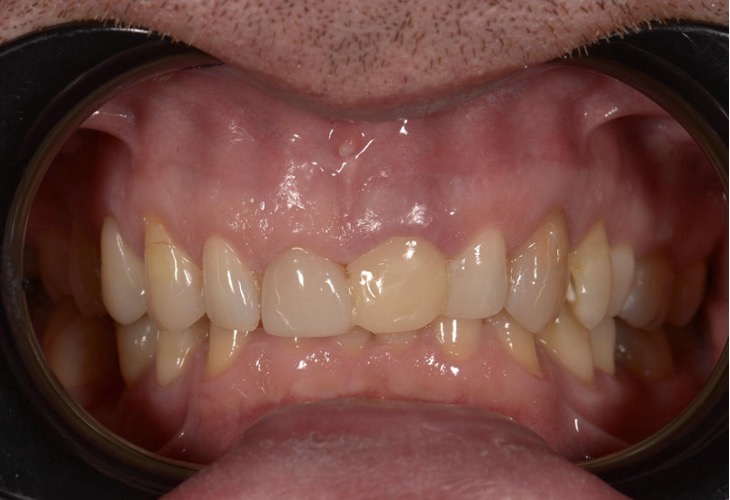
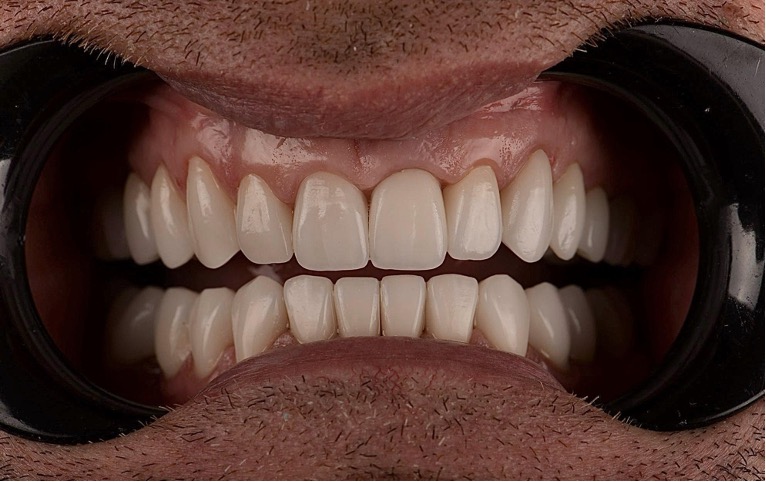
If you dream of a perfect smile, you should first make an appointment with a dentist. Our specialists will gladly help you choose the best option for tooth restoration and answer the question of what veneers are. You will also be able to see how your teeth will look with veneers before and after.
The cost of installing veneers in “Bioclinic”
| Veneers for all teeth | €9800 |
| Orthopedic consultation + sterile kit + 4-hand operation | 300 UAH |
| Cost of ceramic/zirconium veneer | €300 |
| Cost of ceramic/zirconium veneer (art work) | €350 |
| Anesthesia | 250 UAH |
| Dental scan sections | 1100 UAH |
| Mock-up | €7 per tooth |
| Preparation | 0 UAH |
| Temporary crown | 500 UAH |

A specialist in prosthetics in aesthetic dentistry, who solves the problems of inflammation of bone tissue, loss of one or more teeth and restores the integrity of the dentition. Has developed clinical thinking and possesses modern techniques in surgical and orthopedic dentistry. He completed an in...