
Pediatric dentistry in Lviv
Children's baby teeth need just as much attention as their permanent teeth. Problems with them cannot be ignored, as they can lead to improper jaw development and oral diseases. A pediatric dentist in Lviv will help with the treatment and removal of baby teeth, provide professional hygiene, and select orthodontic appliances to form an ideal bite.
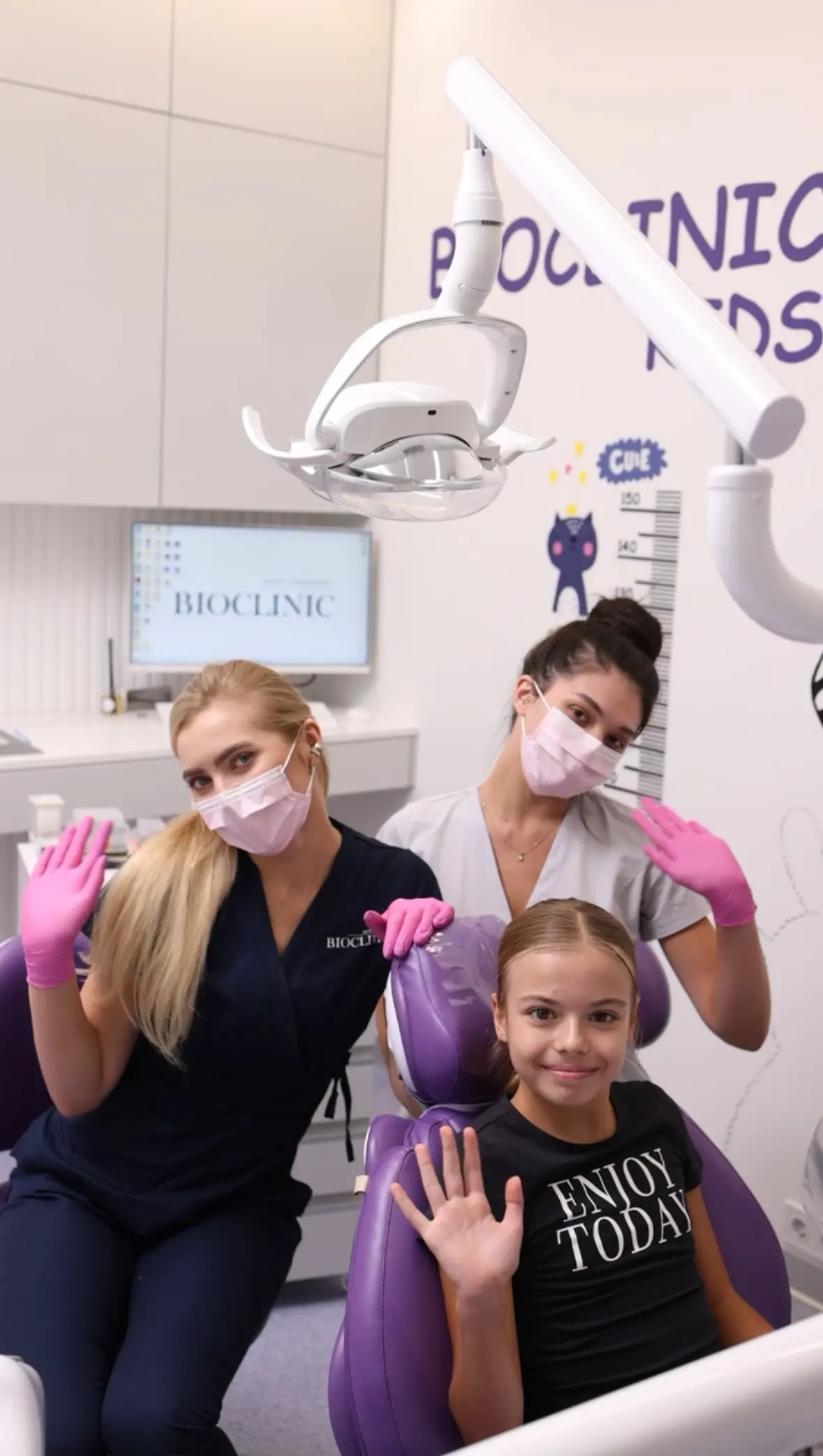
- We accept children from 1 year old – examination, prevention, therapy.
- We provide dental treatment without pain and fear, in a pleasant atmosphere.
- We explain the rules of hygiene to children in an accessible, playful way.
- We select individual treatment plans adapted to age and personality.
- We offer treatment for caries on primary and permanent teeth.
- We help to form a positive attitude towards hygiene and dental examinations.
Children's baby teeth need just as much attention as their permanent teeth. Problems with them cannot be ignored, as they can lead to improper jaw development and oral diseases. A pediatric dentist in Lviv will help with the treatment and removal of baby teeth, provide professional hygiene, and select orthodontic appliances to form an ideal bite.
Children’s Dental Treatment: What Parents Should Know
The key is to establish a positive attitude towards dental visits. If possible, it’s best to visit the dentist every 3–6 months. This offers several advantages:
- The child gets used to the environment and won’t be afraid of check-ups.
- Preventive care helps preserve natural teeth and avoid diseases.
- The dentist can timely advise you on the need for orthodontic or gnathological treatment.
We use modern anesthesia methods without injections or other scary procedures. A pediatric dentist in Lviv can also offer treatment under sedation — the child won’t feel any discomfort and will wake up in a good mood.
However, it is very important that the child undergoes examinations and treatment with you regardless of age. A parent’s presence reduces stress levels and positively affects treatment outcomes. Also remember, any complaints your child makes about their teeth matter. Even mild pain or loose baby teeth may be signs of serious conditions. Don’t ignore these symptoms and don’t wait for complications — act preventively.
Children’s Dentistry Services at Bioclinic
Our children’s dentistry offers the following services:
- Treatment under sedation — using safe medications specially designed for children.
- Restoration of severely damaged or partially destroyed teeth with pediatric crowns.
- Endodontic treatment — cleaning and filling of root canals.
- Safe removal of baby teeth — only when necessary and if the tooth cannot be preserved.
- Caries treatment and aesthetic restoration to create a healthy, natural smile.
- Fissure sealing for caries prevention.
- Professional oral hygiene.
- Selection of individual oral care products — safe and effective.
- Bite monitoring and jaw-facial system development control.
- Teaching your child the basics of oral hygiene.
- Adaptation visits to reduce stress and anxiety.
When to Take Your Child to the Dentist
As soon as your child gets their first baby tooth, add a dental consultation to your to-do list. If teeth erupt later than usual, be sure to see a dentist after their first birthday.
It’s important to understand that children’s dentistry in Lviv not only treats diseases. Our specialists also perform preventive check‑ups, give parents recommendations, and select optimal oral care products.
In the future, plan appointments every 6–12 months depending on your schedule and your child’s dental health. Ideally, maintain a consistent clinic visit schedule. A routine dentist visit creates much less stress than an emergency treatment booking without preparation.
Features of Treating Permanent and Baby Teeth in Children
A pediatric dentist pays special attention to baby teeth. They are highly susceptible to caries and easily decay. Therefore, even mild pain, discomfort, bad breath or other symptoms should prompt a preventive exam.
Don’t delay! Severe infections can spread to permanent tooth buds, disrupting their development and causing decay soon after eruption. See a pediatric dentist — they will choose a painless treatment method that won’t scare your child.
Permanent teeth usually erupt at age 6–7. During this time they need special attention. At check‑ups, the dentist ensures they fully emerge, grow in the right direction, and are undamaged. If needed, orthodontic appliances will be selected to ensure proper bite formation.
Client Reviews


What Happens During the First Visit to a Pediatric Dentist?
- Meeting the child and parents. The dentist engages in casual conversation with the child. They start with neutral topics to gauge trust and anxiety levels, then ask more specific questions about health and hygiene.
- Preparation. The dentist sets up the workspace in the child’s presence, explaining each instrument in playful terms, presenting them as characters from a story. A cartoon is played to soothe the child.
- Oral examination. The pediatric dentist evaluates tooth condition, bite, inflammation or decay. They develop an individual treatment plan that is agreed upon with parents.
- First procedure. If immediate intervention is needed, treatment may begin during the first visit. The dentist may use gas sedation or sweet “gum” anesthesia to avoid injections.
- Recommendations. The specialist provides guidance on home care, selecting toothpaste and brush, diet, and explains the purpose of professional hygiene. If treatment requires multiple visits, a schedule convenient for children and adults is arranged.
- End of the visit. After the exam or treatment, the little patient receives a gift. The dentist asks about their well‑being and impressions, fostering an atmosphere of trust without fear.
Why Choose Bioclinic?
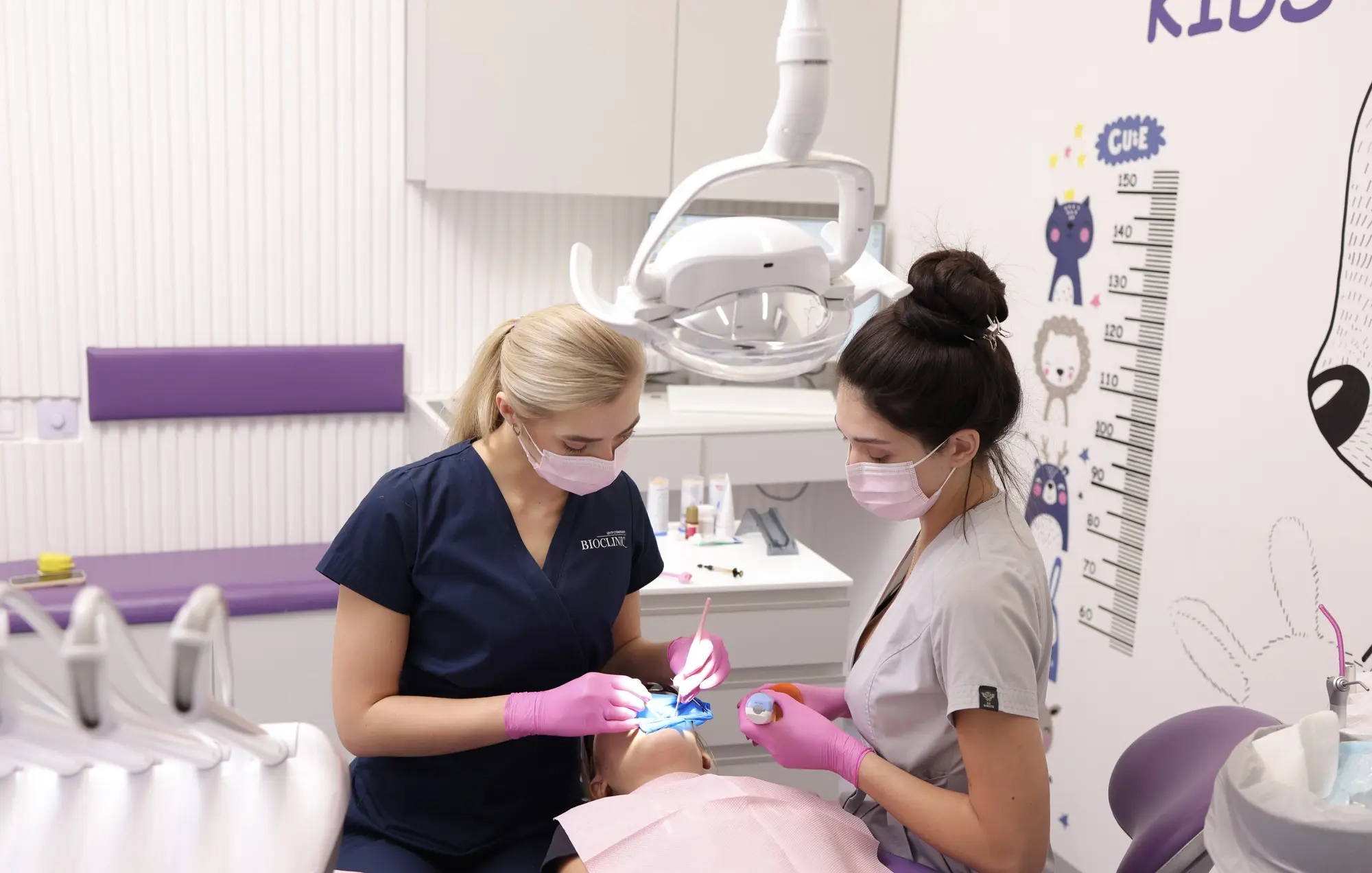
- Specialized Pediatric Dentistry. We’ve ensured that our office resembles a play area, not a doctor’s workspace. It features a bright design and plays cartoons. Our specialists communicate politely with children and listen to their wishes.
- Comfortable Anesthesia. Instead of injections and pills, we offer sweet chewing gums. The doctor informs children about possible discomfort but doesn’t create anxiety. If a child is prone to panic or afraid of pain, treatment can be performed under medical sedation.
- Individual Approach. Scheduling a consultation is pleasant for both children and adults. We help choose the optimal visit time, thoroughly explain all stages of the procedure, and give modern toys after the examination.
- Professionalism and Safety. All our dentists have a high level of qualification and constantly study new treatment methods. The clinic uses certified preparations and state-of-the-art equipment.
Prices for services
| Services | Prices (UAH) |
|---|---|
| Children’s professional hygiene up to 10 years | 1100 UAH |
| Children’s professional hygiene from 10 to 15 years | 1400 UAH |
| Composite / glass-ionomer filling (surface caries) | 900 UAH |
| Composite / glass-ionomer filling (medium caries) | 1000 UAH |
| Composite / glass-ionomer filling (deep caries) | 1200 UAH |
| Fissure sealing | 850 UAH |
| Pediatric crown | 1000 UAH |
| Crown cementation | 100 UAH |
| Therapeutic lining | 200 UAH |
| Antiseptic | 150 UAH |
| Opening of tooth cavity | 200 UAH |
| Application of devitalizing paste | 200 UAH |
| Temporary filling | 100 UAH |
| Filling of one primary (milk) canal | 400 UAH |
| Fluoride treatment for one tooth | 50 UAH |
| Complicated extraction of a primary tooth | 800 UAH |
| Extraction of a primary tooth | 500 UAH |
| Metapex | 350 UAH |
| MTA | 600 UAH |
| Adhesor | 0 UAH (Free) |
| Child psycho-emotional preparation | 300 UAH |
| Initial free consultation up to 10 years | 0 UAH (Free) |

Frequently Asked Questions
What is the difference between a pediatric dentist and an adult dentist?
A pediatric dentist has the same experience in treating baby teeth as they do permanent teeth. He or she understands the psychology of children, which helps to avoid fear and anxiety before the procedure.
How often is it recommended for a child to visit the dentist?
It is advisable to have a check-up every 6 months even if there are no complaints. During the period of active tooth growth or if there are problems - every 3 months.
What to do if the baby tooth has not fallen out, but the permanent tooth is already erupting?
Be sure to consult a dentist. Sometimes it is rational to remove a baby tooth to avoid problems with jaw formation.
Do baby teeth need to be treated?
Yes. Their diseases can cause pain, infections, and affect the health of permanent teeth.
Our other services
-

{braces, aligners}
Orthodontics in Lviv
01/26
-

{removal, implantation}
Surgical dentistry in Lviv
02/26
-

{canal treatment under the microscope}
Endodontist in Lviv
03/26
-

{3D diagnostics}
Computed tomography: CT of teeth in Lviv
04/26
-

Periodontology: periodontist in Lviv
05/26
-

Veneers in Lviv
06/26
-

{caries treatment, hygiene}
Therapeutic dentistry: Dentist-therapist in Lviv
07/26
-

{For adults and children}
Dental treatment under general anesthesia in Lviv
08/26
-

Composite veneers in Lviv
09/26
-

Teeth straightening in Lviv
10/26
-

Gnatology: gnathologist in Lviv
11/26
-

Dental implantation in Lviv
12/26
-

Braces in Lviv
13/26
-

Orthopedic dentistry in Lviv
14/26
-

Bone grafting: bone augmentation in Lviv.
15/26
-

Sinus lifting in Lviv
16/26
-

Aligners in Lviv
17/26
-

Dental prosthetics in Lviv
18/26
-

Teeth whitening in Lviv
19/26
-

Artistic tooth restoration in Lviv
20/26
-

Professional teeth cleaning in Lviv
21/26
-

Dental fillings: fillings in Lviv
22/26
-

Wisdom tooth removal in Lviv
23/26
-

Aesthetic dentistry in Lviv
24/26
-

Tooth extraction in Lviv
25/26
-

Dental crowns in Lviv
26/26