


Impacted Tooth Removal
in Lviv

Guaranteed Comfort

Comprehensive Approach

Personalized Treatment Plan


During the Appointment
The removal of an impacted tooth is a complex surgical procedure that requires thorough preoperative diagnostics, a highly skilled surgeon, and modern equipment. At BIOCLINIC, we perform the extraction of impacted teeth of any complexity, using 3D planning and atraumatic surgical techniques. Our surgeons carefully assess the anatomical features of the tooth’s position, its depth, the number and shape of roots, and its proximity to vital structures (such as the mandibular nerve or maxillary sinus) to determine the optimal surgical approach with minimal risk. We guarantee a painless procedure (including sedation if needed), maximal preservation of bone tissue, and clear post-operative instructions for a fast and comfortable recovery.
The doctor performs an examination, assessing the condition of the oral mucosa, the presence of inflammation, the stage of eruption of the impacted tooth, signs of pericoronitis, the condition of neighboring teeth, and the accessibility of the area.
A CT scan (3D imaging) is always performed to determine the tooth’s position, depth, root shape, bone thickness, and its proximity to the nerve, maxillary sinus, and neighboring teeth.
Based on the CT scan, the extent of the surgery is planned, including gum incision, bone removal, tooth sectioning, and assessment of the risk of nerve or sinus injury. The patient is informed about the planned procedure.
A surgical approach is planned to maximize bone preservation, and, if necessary, the extraction socket is filled with osteoplastic material.
The patient is informed about the duration and course of the procedure, the method of anesthesia is selected (local anesthesia or sedation), and post-operative instructions are provided.
After the procedure, medications are prescribed, and instructions are provided regarding oral hygiene, diet, and daily routine. A follow-up appointment is mandatory within 5–7 days.
Impacted Tooth Extraction

1
Always by Your Side
We accept patients with acute pain caused by an impacted tooth (pericoronitis or exacerbation of chronic inflammation) on the same day of contact, including weekends and holidays.
2
3D Planning and Maximum Safety
Before each complex impacted tooth extraction, we always perform a computed tomography (CT) scan. This allows us to accurately determine the tooth’s position, depth, and the number and shape of its roots.
3
Atraumatic Extraction with Bone Preservation
Our surgeons use modern techniques that involve sectioning the tooth into fragments, allowing the removal of impacted teeth through minimal bone access without unnecessary trauma to the jaw.
4
Painless Treatment Under Sedation
All procedures are performed under strong local anesthesia, ensuring complete comfort. For complex, lengthy operations (over 60 minutes) or for patients with high anxiety, we offer sedation (medicated sleep).
5
Comprehensive Care Until Full Recovery
After the removal of an impacted tooth, the patient receives detailed instructions and individually tailored medication therapy (antibiotics, pain relievers, and anti-inflammatory drugs). A follow-up appointment is mandatory to remove sutures, assess healing, and monitor bone tissue recovery.
Indications for Impacted Tooth Extraction
If an impacted tooth (most often a wisdom tooth) has partially erupted, a soft tissue “cap” forms over it, under which food debris and bacteria can accumulate.
An impacted tooth can press against the roots of neighboring healthy teeth, causing their resorption (breakdown).
When planning orthodontic treatment (such as braces to correct the bite), impacted teeth—especially wisdom teeth—are often subject to removal.
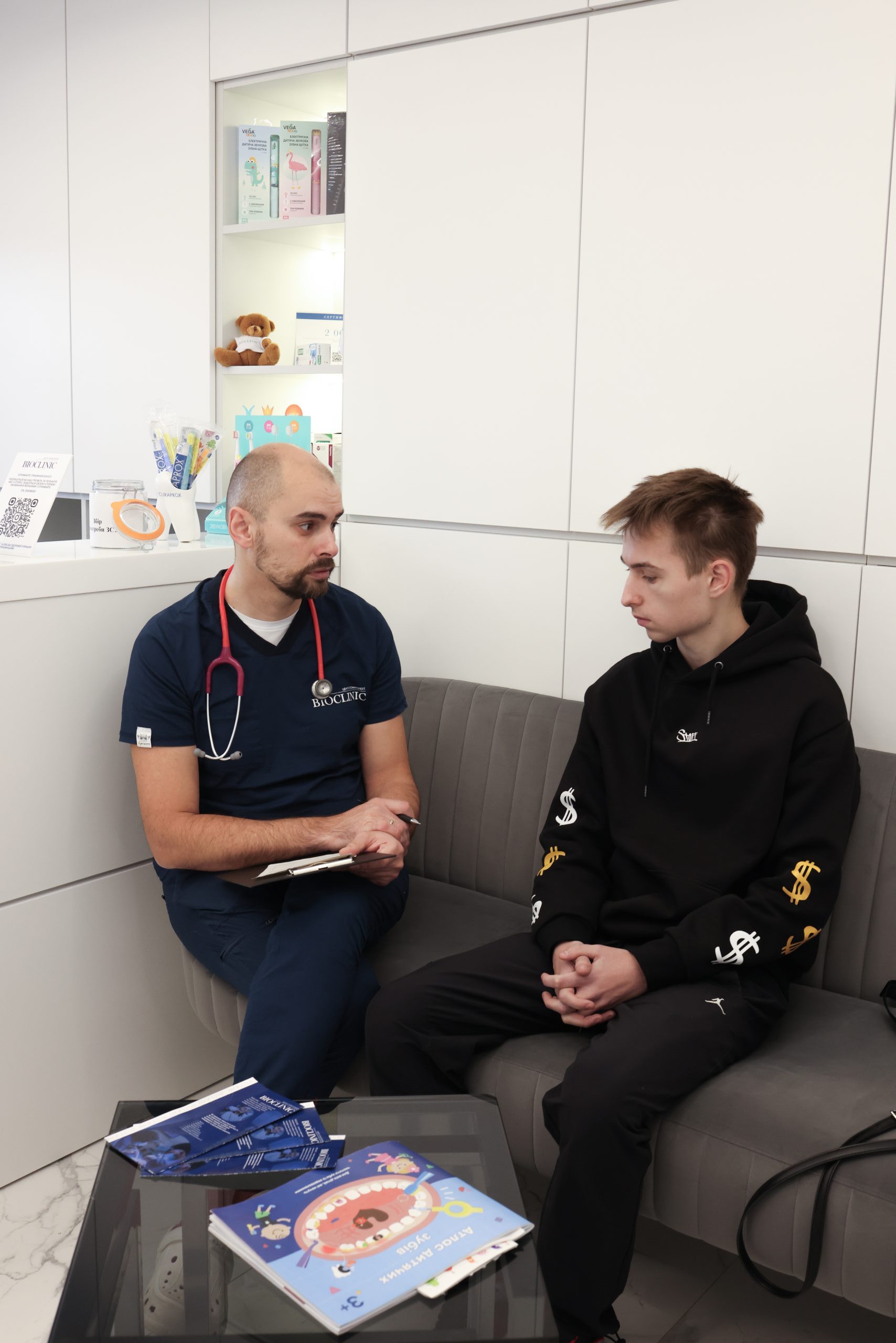
Patients come to BIOCLINIC in Lviv when they experience problems caused by impacted teeth, such as chronic pain, inflammation, chewing difficulties, or complications during orthodontic treatment. During the consultation, the surgeon conducts a thorough examination and a mandatory computed tomography (CT) scan to assess the tooth’s position, anatomy, degree of impaction, and proximity to the mandibular nerve and maxillary sinus.
Types of Surgical Procedures for Impacted Tooth Removal at BIOCLINIC

Simple Extraction of a Partially Impacted Tooth
This method is used when part of the crown of the impacted tooth protrudes above the gum surface and is accessible for instrument grasping. Under local anesthesia, the doctor lifts the gum “cap” (if present), slightly expands the socket with an elevator if necessary, and then removes the tooth with forceps.
Complex Extraction with Gum Incision and Bone Resection
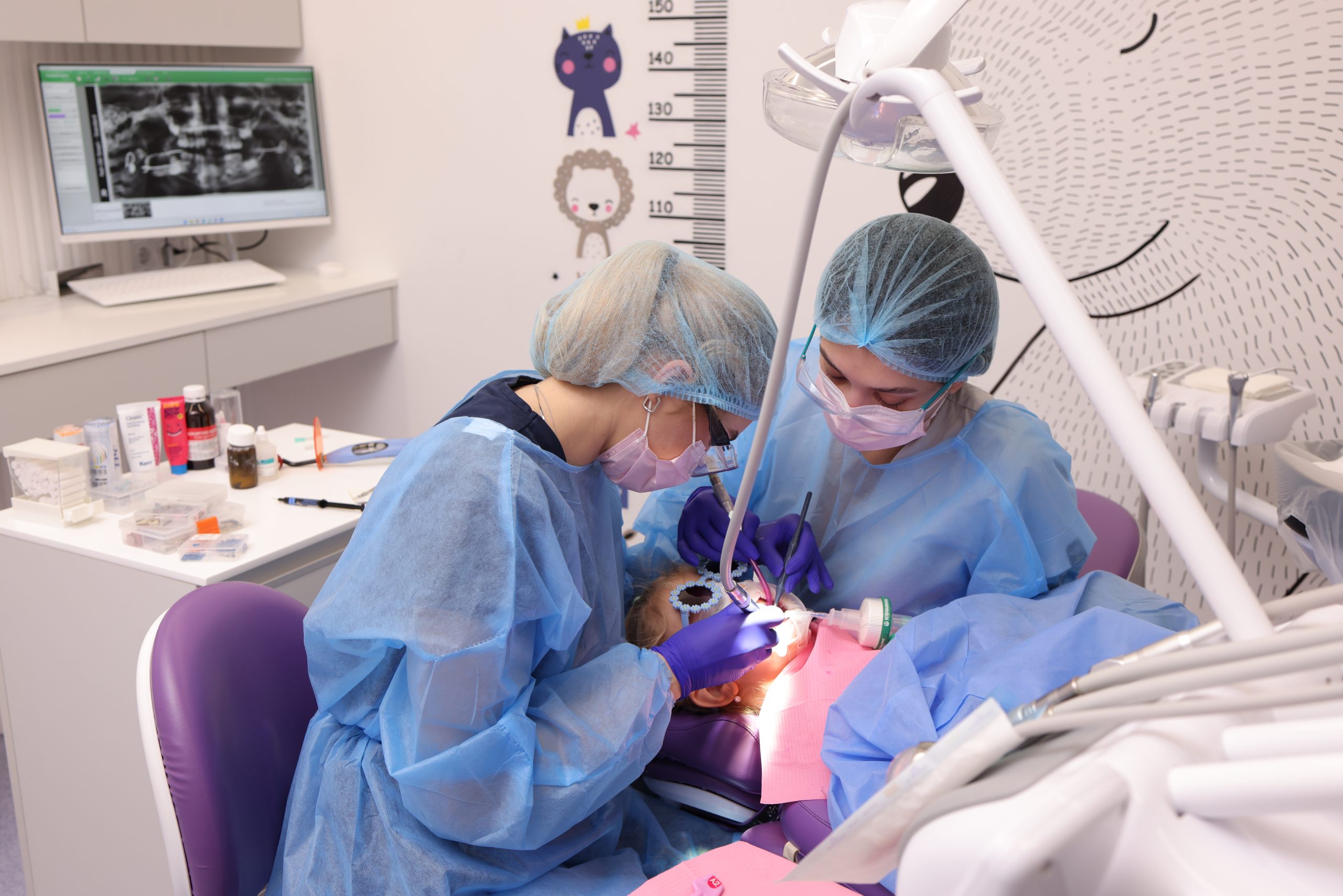
For a fully impacted tooth, completely covered by gum and bone tissue, a surgical procedure with access through the gum is required. The surgeon makes an incision in the soft tissue and reflects a mucoperiosteal flap to gain access to the bone.
Tooth Sectioning (Coronectomy) for Extraction
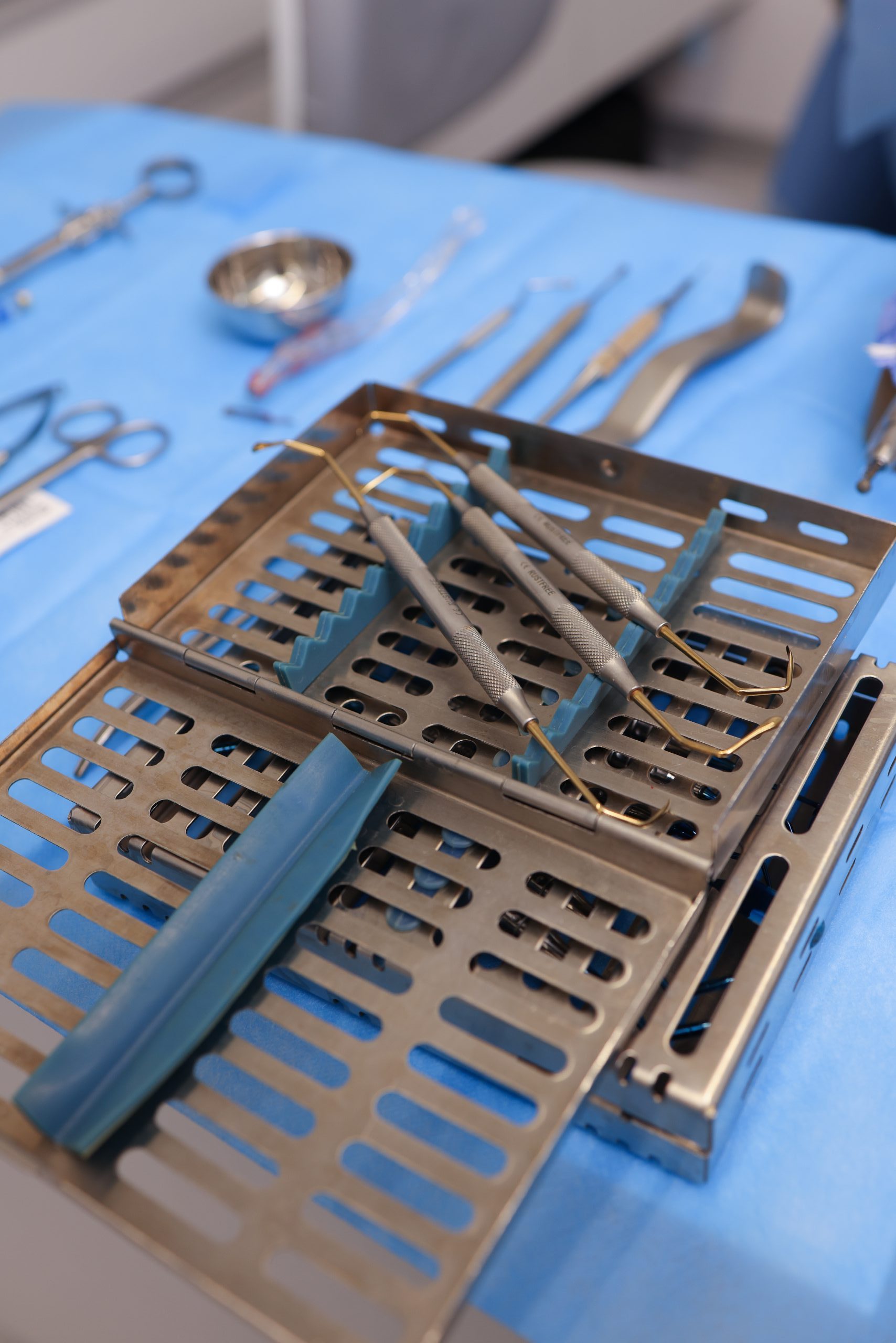
For complex positioning of an impacted tooth—especially when it is close to the mandibular nerve, maxillary sinus, or has severely curved roots—the tooth sectioning method is used. Using a surgical drill, the surgeon divides the tooth into 2–4 fragments, which are then removed individually.
Extraction of an Impacted Upper Jaw Tooth Near the Maxillary Sinus
Impacted teeth in the upper jaw are often located very close to—or even within—the maxillary sinus. The procedure requires special care and mandatory preoperative 3D planning. Through a minimal access, the surgeon carefully removes the tooth while continuously monitoring the integrity of the sinus floor.
Reviews

Користуюсь послугами клініки вже рік. Завжди дуже приємні лікарі, які готові обслуговувати тривожність перед лікування, та все чітко пояснити.Дуже гарний досвід видалення 8-к попри чутливість до багатьох препаратів та купу страхів.Чістки та лікування також завжди проходило максимально уважно та дбайливо. Лікарка Горбанюк Ірина прибрала чутливість зуба, коли інші стоматологи ,впродовж 2х років, пропонували видалити здоровий нерв.
Дуже дякую пародонтологу Горбанюк Ірині за професійний підхід і турботу! Лікар уважна, все пояснює зрозуміло, лікування пройшло безболісно. Тепер мої ясна в хорошому стані, немає кровоточивості і значно зменшилась чутливість! Рекомендую Bioclinic!
Вже четвертий місяць я регулярно відвідую стоматологію Bioclinic, готуючись до встановлення брекетів)За цей час мені видалили зуби мудрості, пролікували канали та виконали реставрацію передніх зубчиків. Кожен мій візит супроводжувався уважним і турботливим ставленням лікарів-стоматологів, детальним поясненням усіх етапів лікування та відмінною якістю виконаних процедур)Наразі я дуже задоволена сервісом і якістю обслуговування стоматології та можу її сміливо вам рекомендувати👍
Я видаляла зубки мудрості в цій клініці, по рекомендації сестри. І залишилася дуже задоволена, хоча так боялася, мене калатало, бо не люблю стоматологічні процедури. Ми розмовляли з лікарем про весь процес, як все проходитиме, що він робитиме, координував мене у всіх своїх діях, заспокоював своїм спокійним тембром голоса. За годинку у мене вже не стало 2 зубів і стресу, бо після першого зуба, я зрозуміла, що мені взагалі не боляче, і вже тоді заспокоїлася. Все пройшло дуже добре, тому дякую Гедеон Миколі за турботу, і команді асистентів за вашу прекрасну роботу ❤️
Приємно здивована підходом до лікування та спілкування . Лікарі чуйні та уважні до кожної деталі. Чітко все розповідають та розказують про етап лікування . Нічого зайвого ненав'язують .Протягом процедури дуже уважні до пацієнта, все чітко та поетапно розповідають в процесі лікування. Чудова клініка , на найвищому рівні .Дякую , що лікування проходить без стресу та страху ) 😊
Хочу написати слова вдячності всьому персоналу стоматології BIOCLINIC: дякую Вам за теплий прийом та професіоналізм, тут працюю справжні професіонали своєї справи!Якщо хтось так як і я боїться видаляти зуби мудрості ( я вже не боюсь ☺️) , варто звернутись до Тараса Богдановича - не встигнете порахувати до п'яти, як зуб мудрості вже буде видалено 💪довше доведеться чекати поки подіє анастезія, бо зуб він видаляє на раз-два-три 👌.Щиро вдячна за професіоналізм Любомиру Любомировичу , ох і натерпівся він з моїми каналами ...😅
Дякую клініці Bio clinic за професіоналізм і чудовий сервіс! Окрема подяка лікарю Тарасу Богдановичу за уважність і безболісне лікування, протезування .Сучасне обладнання,чистота та доброзичлива атмосферароблять візит комфортним. Щиро рекомендую всім !
Стоматологія «Bioclinic» справляє враження сучасної клініки, де комфорт пацієнта є пріоритетом. Тут панує затишна атмосфера, а привітний персонал одразу викликає довіру. Лікарі – справжні професіонали, які детально пояснюють план лікування, відповідають на всі запитання та пропонують індивідуальний підхід. Особливо приємно, що використовуються сучасні технології та високоякісні матеріали, що гарантує чудовий результат.Відвідування «Bioclinic» залишає лише позитивні враження завдяки уважності, доброзичливості та професіоналізму команди. Рекомендується всім, хто шукає якісне стоматологічне обслуговування на найвищому рівні!
Велика подяка стоматології Bioclinic за професіоналізм і турботу! Лікарі дійсно турбуються про комфорт пацієнтів і детально пояснюють кожен етап лікування. Сучасне обладнання та комфортна атмосфера зробили лікування легким і безболісним.Рекомендую Bioclinic усім, хто цінує якість і хороший сервіс)
Before-and-After Examples


Stages of Impacted Tooth Extraction
When you visit BIOCLINIC with a problematic impacted tooth causing pain, inflammation, or threatening the health of neighboring teeth, you will receive professional care and comprehensive treatment aimed at safe tooth removal, preservation of bone tissue, and preparation for future prosthetics. The extraction of an impacted tooth follows the steps outlined below:
1
3D Diagnostics and Preoperative Planning
A mandatory step is a computed tomography (CT) scan (3D imaging), which provides precise information about the position of the impacted tooth.
2
Determining the Surgical Approach
Based on the CT scan data, the surgeon selects the optimal surgical approach: the extent of soft tissue incision, the need for bone removal to access the tooth, and whether tooth sectioning into fragments is required.
3
Anesthesia and Surgical Procedure
The procedure is performed under local anesthesia using modern agents (for complex, lengthy procedures or for patients with high anxiety, sedation is used). The surgeon makes a gum incision and reflects a mucoperiosteal flap to gain access to the bone.
4
Revision, Debridement, and Bone Preservation
After tooth removal, the surgeon carefully inspects the socket, removes granulation tissue and fragments, and rinses it with antiseptic solutions. When extracting a tooth from the upper jaw, the integrity of the maxillary sinus floor is always checked.
5
Postoperative Follow-Up and Long-Term Monitoring
The patient receives detailed, individualized instructions: a mandatory course of antibiotics (to prevent infectious complications after complex bone procedures), painkillers, and antiseptic rinses (without traditional mouthwash swishing!).
Post-Operative Care After Impacted Tooth Extraction

Diagnostic Methods
By scheduling an appointment at the clinic, you can undergo the following examinations

Visual Examination

Dental Microscopy
Computed Tomography (CT)
Electromyography (EMG)
X-ray Imaging
Digital 3D Scanning


Creating a Traditional Dental Impression

Intraoral Photographs
Advantages of Impacted Tooth Removal at BIOCLINIC
Service Prices
- Primary tooth extraction 800 UAH
- Single-root tooth extraction 1,200 UAH
- Multi-root tooth extraction 1,700 UAH
- Complicated single-root tooth extraction 1,400 UAH
- Complicated multi-root tooth extraction 1,900 UAH
- Complexity level 1 (atypical wisdom tooth extraction) 2,400 UAH
- Complexity level 2 (atypical wisdom tooth extraction) 3,200 UAH
- Complexity level 3 (atypical wisdom tooth extraction) 4,800 UAH
- Root apex resection (one tooth) 4,500 UAH
- Hemostatic sponge 300 UAH
- Lip/tongue frenuloplasty 3,200 UAH
- PRF Membrane 900 UAH
- Bone grafting in the area of one tooth (materials not included) 300 EUR
- Sinus lift surgery 600 EUR
- Sinus lift surgery (open) 300 EUR
- Gingivoplasty in the area of 1 implant 100 EUR
- Gingivoplasty of 1-3 teeth in one area 150 EUR
- Gingivoplasty of 4-6 teeth 600 EUR
- Vestibuloplasty of 1 segment 300 EUR
- Bone augmentation using autogenous bone laminae 800 EUR
- Benign tumor removal 250 EUR
Our Doctors

Frequently Asked Questions (FAQ)
Заповніть форму і ми передзвонимо для запису на консультацію
Is it necessary to remove an impacted tooth if it doesn’t cause pain?
Not always, but in most cases, removal is recommended even if there are no symptoms. An impacted tooth may remain painless for years but can act as a “time bomb.” It can cause decay in the adjacent tooth (due to difficulty maintaining hygiene), root resorption of a healthy tooth, or the formation of a follicular cyst that destroys bone tissue. As we age, the bone becomes denser, making extraction more difficult and increasing the risk of complications. The decision is made individually after 3D diagnostics.
Is it painful to remove an impacted wisdom tooth?
Modern anesthesia completely eliminates pain during the procedure. You may feel pressure or vibration, but not pain. For complex, lengthy procedures (over 60 minutes) or for patients with high anxiety, we offer sedation (medicated sleep), allowing the patient to fully relax. After the procedure, when the anesthesia wears off, some pain may occur, but it can be easily managed with prescribed painkillers. The intensity of pain depends on the complexity of the extraction and individual sensitivity.
How long does it take to remove an impacted tooth?
The duration of the procedure depends on the complexity of the case, which is determined based on CT scan data. A simple extraction of a partially impacted tooth takes 20–40 minutes. A complex extraction of a fully impacted tooth—especially involving tooth sectioning, working near a nerve, or the maxillary sinus—can take 60–90 minutes. The surgeon always informs the patient of the estimated duration during the planning stage.
What are the risks of removing an impacted tooth in the lower jaw?
The main challenge in the lower jaw is the proximity of the tooth roots to the mandibular canal, which contains the nerve. If the nerve is damaged, temporary (and rarely permanent) numbness of the lip, chin, and gums on the affected side may occur. To minimize this risk, we always perform a CT scan to precisely determine the position of the roots in relation to the nerve. In the most complex cases, a coronectomy may be performed—intentionally leaving the root portion closest to the nerve. There is also a risk of jaw fracture, but this is very rare.
Is it possible to remove impacted teeth during pregnancy?
Planned removal of impacted teeth is not performed during pregnancy. However, if an acute complication occurs (such as purulent pericoronitis or an abscess) that threatens the mother’s health, the procedure is performed regardless of the term, as infection poses a greater risk to the fetus than the local intervention. The safest period is the second trimester (14–27 weeks). We use pregnancy-safe anesthetics, minimize radiation exposure (if necessary), and always coordinate the treatment plan with the obstetrician.
How long does it take for the socket to heal after removing an impacted tooth?
Initial healing of the soft tissues (gums) occurs within 7–14 days, and sutures are removed after 5–7 days. Swelling may last 3–5 days, peaking on days 2–3. Complete bone regeneration in the area of the extracted tooth takes 4–6 months. The healing rate depends on the complexity of the procedure, the patient’s age, adherence to recommendations (antibiotics, oral hygiene, diet), and overall health. If osteoplasty was performed, the healing process is additionally monitored by the doctor.